
Written by Dr Kavya Chandrashekar, paediatric pulmonologist (children’s lung specialist). Last reviewed: November 2026.
Parents often tell me that watching their child have a febrile seizure was the most frightening moment of their lives. Many were sure their child was dying.
So let me start with the most important thing: a simple febrile seizure looks terrifying, but it is almost always harmless. It does not cause brain damage, and nearly all children grow out of them.
What is a febrile seizure?
A febrile seizure (also called a febrile convulsion or fever fit) is a fit caused by a fever. It happens in children aged 6 months to 5 years, most often between 12 and 18 months. About 2 to 5 in every 100 children will have one.
During a seizure your child may:
- go stiff, then their arms and legs jerk or twitch
- roll their eyes back or stare
- lose consciousness
- go floppy, or turn blue around the lips
- wet or soil themselves, or be sick
Most seizures stop within 2 to 3 minutes. Afterwards your child may be sleepy or confused for up to an hour.
What to do during a febrile seizure: 5 steps
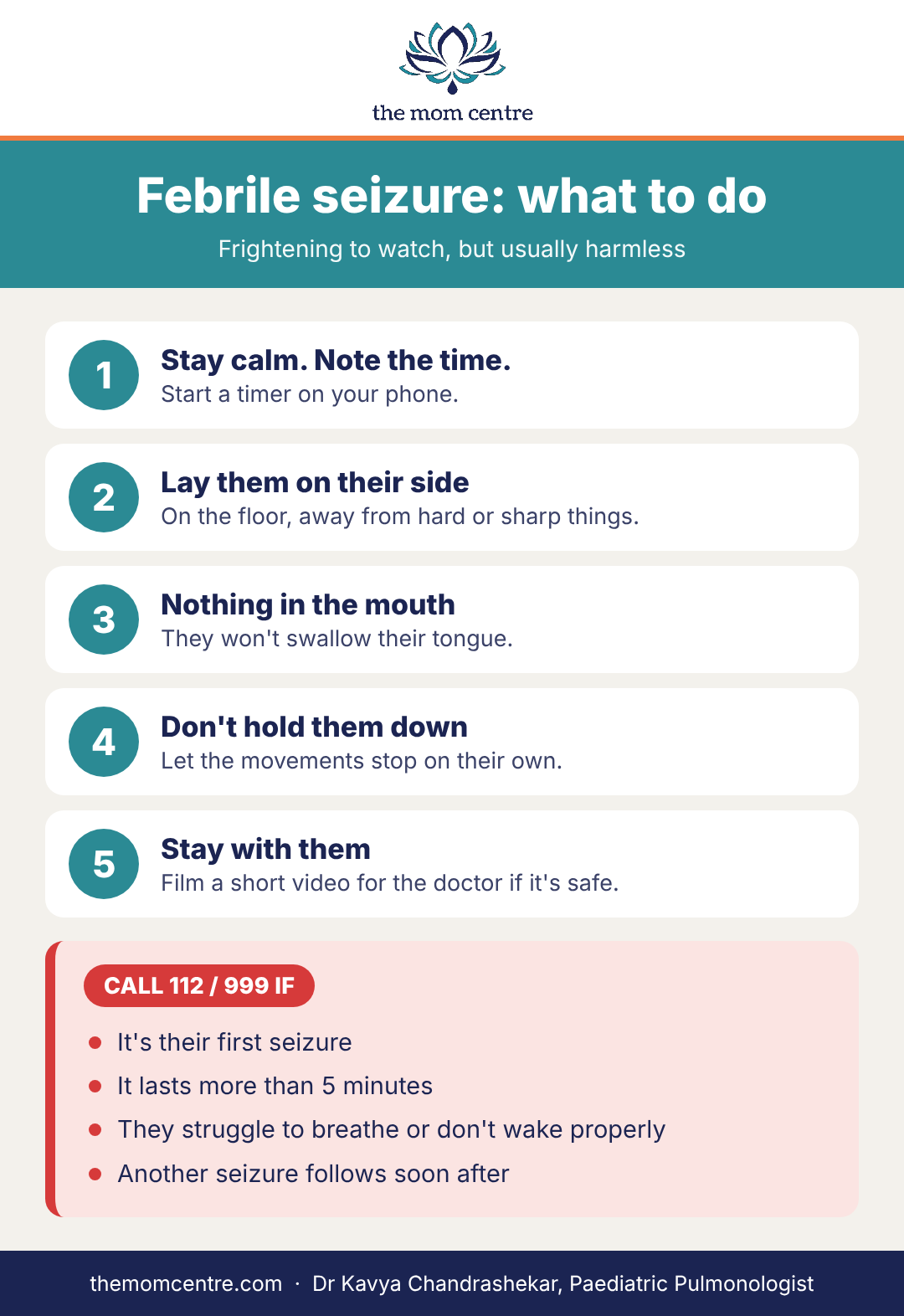
- Stay calm and note the time. Start a timer on your phone.
- Lay your child on their side on a soft, flat surface such as the floor, away from anything hard or sharp.
- Don’t put anything in their mouth. They won’t swallow their tongue.
- Don’t hold them down, and don’t try to stop the movements.
- Stay with them. If you can do it safely, film a short video for the doctor.
When the jerking stops, keep them in the recovery position (on their side) until they’re fully awake.
What NOT to do
- Don’t put them in a cold bath or sponge them
- Don’t give medicine or drinks by mouth during the seizure
- Don’t shake them to wake them
When to call an ambulance
Call 112 (India) / 999 (UK) if:
- it’s your child’s first seizure
- the seizure lasts more than 5 minutes
- your child has trouble breathing, or is blue once the jerking has stopped
- they don’t wake up properly afterwards
- they have another seizure soon after
After any first seizure, your child should be checked by a doctor to find the cause of the fever.
Simple vs complex febrile seizures
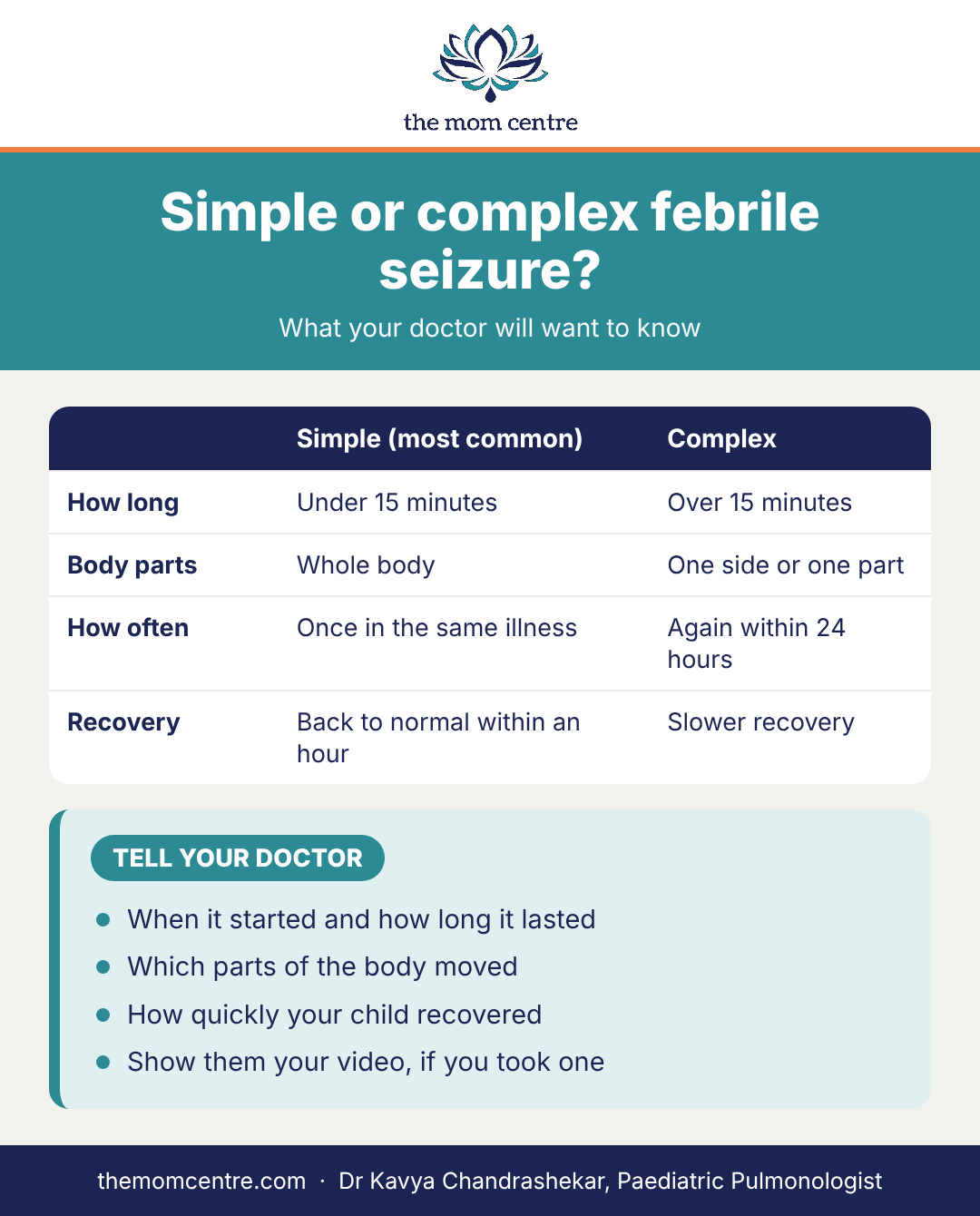
Most febrile seizures are simple: they last under 15 minutes, involve the whole body, happen once in the same illness, and your child is back to normal within an hour. Complex seizures last longer, affect one side or part of the body, or happen again within 24 hours. They need more assessment by a paediatrician, so tell your doctor exactly what you saw. Your video helps.
Will it happen again?
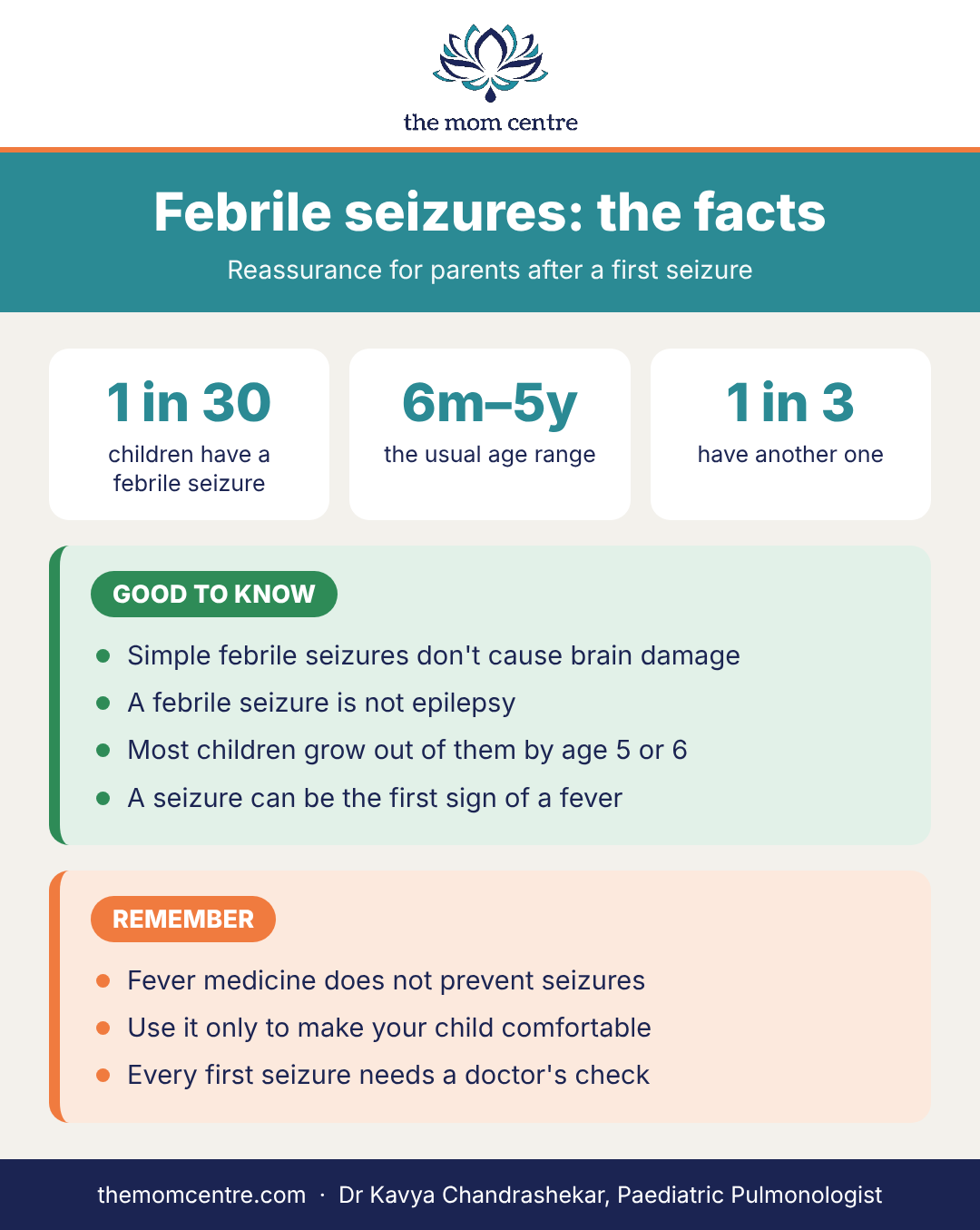
About 1 in 3 children who’ve had one febrile seizure will have another, usually within the following year. It’s more likely if the first one happened before 18 months, or if there’s a family history.
Can I prevent it with fever medicine? Sadly, no. Studies show paracetamol and ibuprofen don’t prevent febrile seizures. Use them only to make your child comfortable.
Does it mean my child has epilepsy?
No. A febrile seizure is not epilepsy. The chance of epilepsy later is only slightly higher than in other children, and the large majority never develop it.
Frequently asked questions
Are febrile seizures dangerous?
Simple febrile seizures are not dangerous and don’t cause brain damage. Call an ambulance for a first seizure or one lasting more than 5 minutes.
What age do febrile seizures stop?
Most children stop having them by age 5 or 6.
Can a febrile seizure happen before the fever is noticed?
Yes. A seizure is sometimes the first sign that a child has a fever.
Should I give paracetamol after a febrile seizure?
Once your child is fully awake and able to swallow, you can give it to make them comfortable. It won’t prevent another seizure.
Should my child go to hospital after a febrile seizure?
After a first seizure, yes, to find the cause of the fever. For later short seizures, your doctor will tell you what to do.
Read next: When to worry about your child’s fever · How to bring down your child’s fever at home
Sources
This article is for general information and does not replace advice from your own doctor. If you are worried about your child, contact your doctor or local emergency services.