
Written by Dr Kavya Chandrashekar, paediatric pulmonologist (children’s lung specialist). Last reviewed: November 2026.
It’s 7 am. The school bus comes in 20 minutes, the lunch box is empty, and you’re wondering if a sandwich and a packet of crisps will do again.
Packing a healthy lunch box shouldn’t need a nutrition degree. In my clinic, parents tell me the hard part isn’t knowing that children need vegetables. It’s knowing what “balanced” actually looks like in a box, every single morning. So here is the simple formula I give families: the 5-colour lunch box.
Quick answer: the 5-colour formula
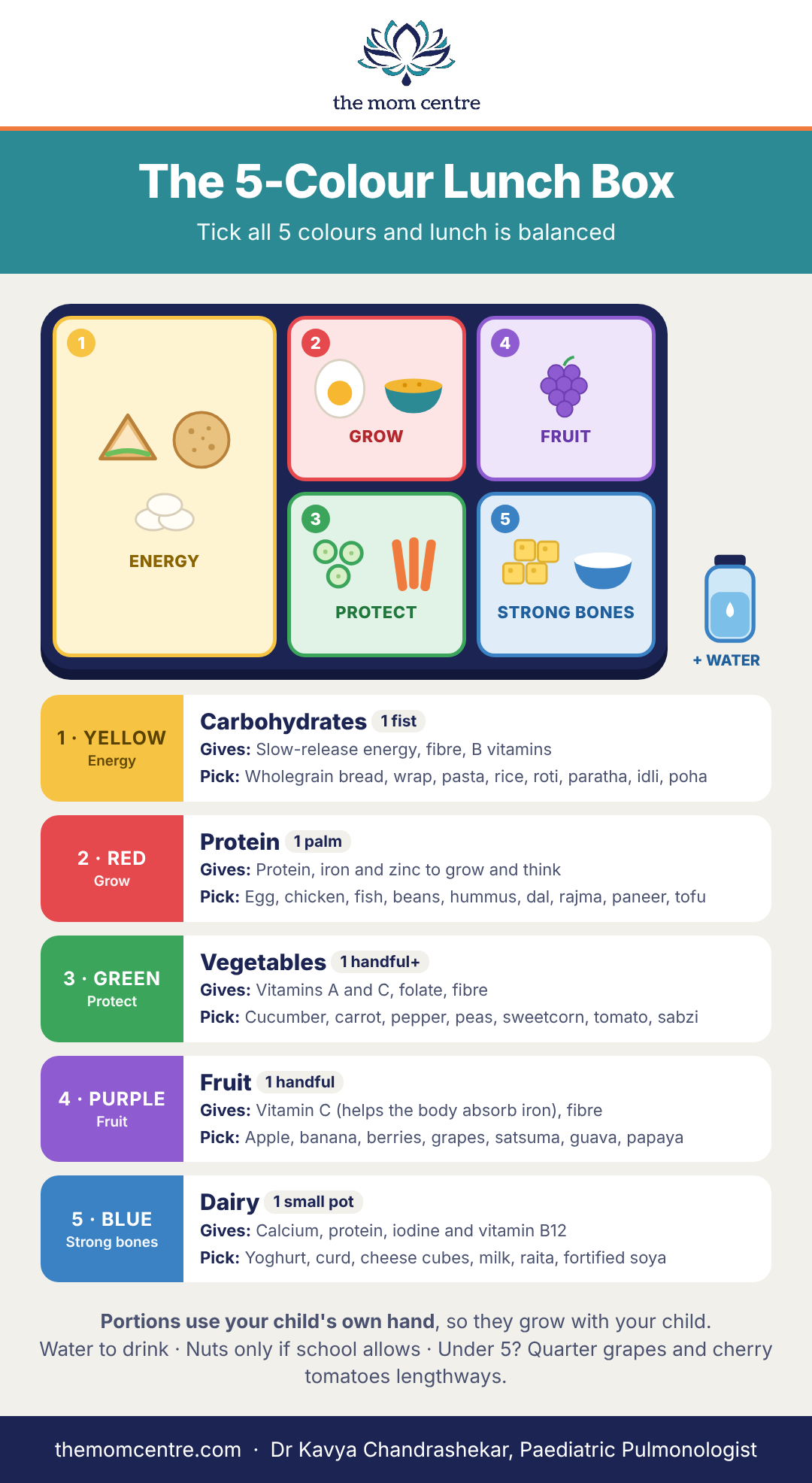
A balanced lunch box has one food from each of 5 colour groups, plus water:
- Yellow = Energy. A carbohydrate food: wholemeal bread, wrap, pasta, rice, roti, paratha, idli or poha. Portion: 1 fist.
- Red = Grow. A protein food: egg, chicken, fish, beans, hummus, dal, rajma, paneer or tofu. Portion: 1 palm.
- Green = Protect. A vegetable: cucumber, carrot, pepper, peas, sweetcorn, tomato or sabzi. Portion: 1 handful or more.
- Purple = Fruit. Any fruit: apple, banana, berries, grapes, satsuma, guava or papaya. Portion: 1 handful.
- Blue = Strong bones. A dairy food: yoghurt, curd, cheese, milk or raita. Portion: 1 small pot.
Plus water to drink. If you can tick all 5 colours, the lunch is balanced. That’s the whole formula.
3 example lunch boxes: the formula in action
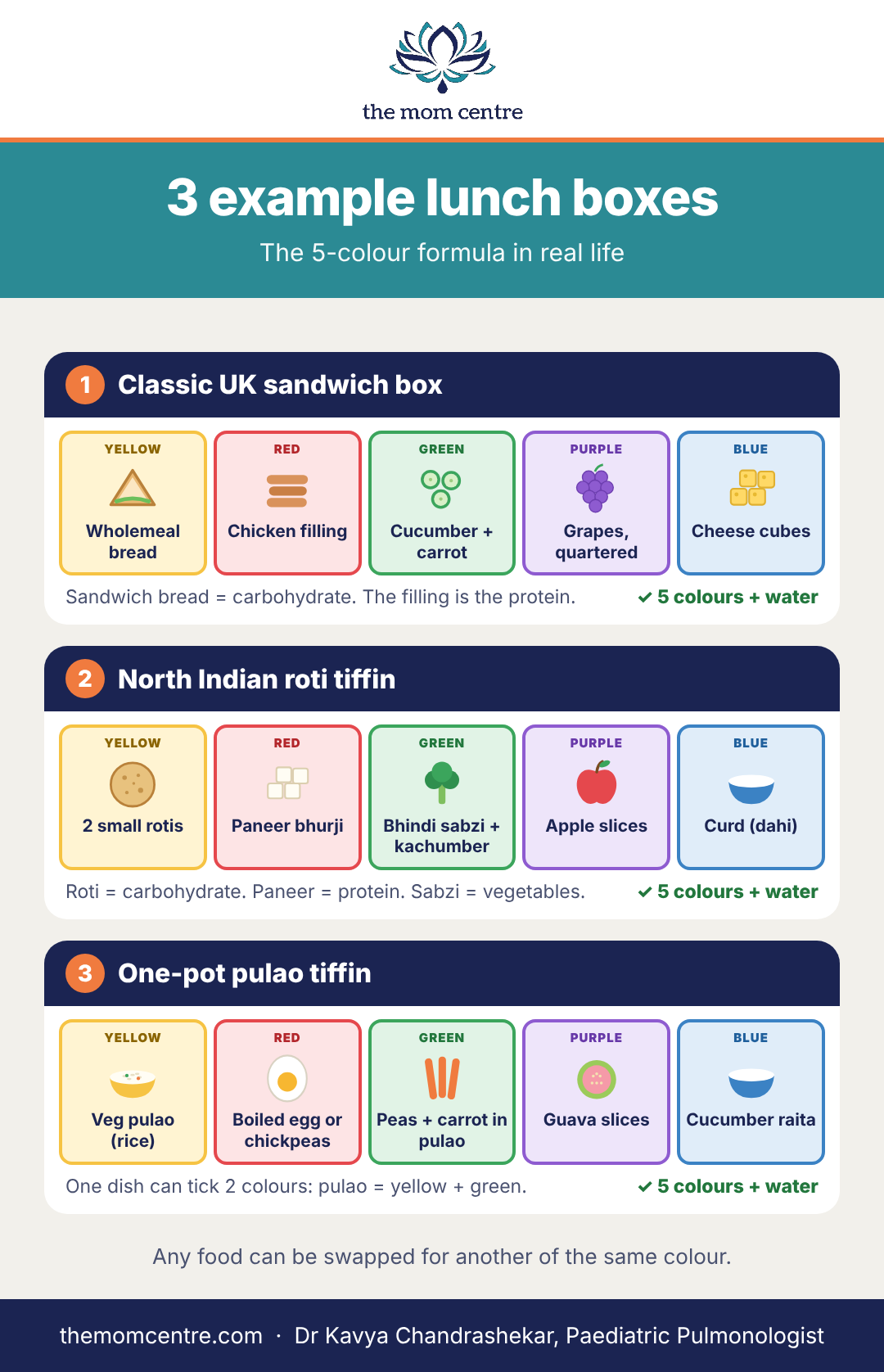
Here is how the 5 colours work in three real lunch boxes. Look at each food, ask “which colour is this?”, and tick it off.
Example 1: Classic UK sandwich box
- Yellow (carbohydrate): 2 slices of wholemeal bread.
- Red (protein): chicken filling. The sandwich gives you two colours in one.
- Green (vegetables): cucumber and carrot sticks.
- Purple (fruit): a handful of grapes, quartered for under-5s.
- Blue (dairy): a few cheese cubes.
Plus a bottle of water. All 5 colours ticked.
Example 2: North Indian roti tiffin
- Yellow (carbohydrate): 2 small rotis (one fist).
- Red (protein): paneer bhurji (one palm).
- Green (vegetables): bhindi sabzi with a little kachumber salad.
- Purple (fruit): apple slices.
- Blue (dairy): a small pot of curd.
Plus water. Swap paneer for dal, rajma or egg on other days and it still counts as red.
Example 3: One-pot pulao tiffin
- Yellow (carbohydrate): veg pulao (the rice).
- Green (vegetables): the peas, carrots and beans cooked in the pulao. One dish can tick two colours.
- Red (protein): a boiled egg, or a handful of chickpeas stirred into the pulao.
- Purple (fruit): guava slices (packed with vitamin C, which helps absorb iron).
- Blue (dairy): cucumber raita.
Plus water. This is a great one for busy mornings: one pot, and two colours are already done.
Why colours work so well
Children (and tired parents) remember colours far more easily than words like “carbohydrate” or “micronutrients”. The colours here are a code for each food group, not the colour of the food itself. Cheese is yellow but goes in the blue group; a banana is yellow but counts as purple fruit.
The 5 groups are based on the NHS Eatwell Guide in the UK and the ICMR-NIN My Plate for the Day in India. Both say the same thing in different words: plenty of fruit and vegetables, wholegrain carbohydrates, some protein, some dairy, and not much sugar, salt or fried food.
It also makes lunch a game. Ask your child: “Have we got all 5 colours?” Children who help pack their own lunch are more likely to eat it.
The 5 colours and the nutrients they give
Each colour group brings different nutrients. Together they cover everything a growing child needs from a meal.
1. Yellow: Energy (carbohydrates)
Gives: slow-release energy, fibre, B vitamins, and iron and calcium in fortified flour and cereals.
Why it matters: children’s brains run on glucose. A child who skips carbohydrates at lunch often struggles to concentrate by mid-afternoon.
Tip: choose wholegrain where you can: wholemeal bread, brown rice, wholewheat pasta, atta roti, ragi or millet. They keep children fuller for longer. Mix half white and half wholemeal if your child is fussy.
2. Red: Grow (protein foods)
Gives: protein for growth and repair, iron for energy and learning, zinc for immunity, and omega-3 fats from oily fish.
Why it matters: iron deficiency is one of the most common nutrient problems in children, especially in India and in vegetarian families. It causes tiredness, poor concentration and more infections.
Tip: vegetarian? Dal, rajma, chole, sprouts, besan, tofu, paneer and eggs (if eaten) all count. Pair them with a vitamin C food (see purple) to absorb more iron.
3. Green: Protect (vegetables)
Gives: vitamins A and C, folate, potassium, magnesium and fibre.
Why it matters: vitamin A and C help the immune system and skin, and fibre keeps the gut healthy and prevents constipation.
Tip: raw crunchy sticks (cucumber, carrot, pepper) survive the morning better than soggy salad. Hidden veg counts too: palak in a paratha, peas in pulao, grated carrot in a chilla.
4. Purple: Fruit
Gives: vitamin C, fibre, potassium and natural antioxidants.
Why it matters: vitamin C helps the body absorb iron from plant foods like dal, beans and spinach. That’s why a fruit and a protein make such a good team.
Tip: whole fruit, not juice. Guava, oranges, kiwi and berries are especially rich in vitamin C. Squeeze lemon on apple slices to stop them browning.
5. Blue: Strong bones (dairy)
Gives: calcium, protein, iodine, vitamin B12 and vitamin A.
Why it matters: childhood is when bones build most of their strength for life.
Tip: choose plain yoghurt or curd and add fruit yourself, as many children’s yoghurts are high in sugar. Dairy-free? Use calcium-fortified soya, oat or almond alternatives (unsweetened), or calcium-rich foods like ragi and tofu.
What about healthy fats?
Children need some fat for energy and to absorb vitamins A, D, E and K. You don’t need a separate colour: a little olive oil, ghee or butter in cooking, a few slices of avocado, a sprinkle of seeds, or oily fish like salmon and sardines are enough. Nuts and nut butters are excellent too, but many schools are nut-free, so check your school’s policy first.
And vitamin D?
Very little vitamin D comes from food, so a lunch box can’t cover it. In the UK, the NHS advises a daily vitamin D supplement (10 micrograms) for all children aged 1 to 4, and for older children in autumn and winter. In India, vitamin D deficiency is also very common despite the sunshine. Ask your doctor whether your child needs a supplement.
How much to pack: use your child’s hand
The easiest portion guide is your child’s own hand, because it grows as they grow:
- Yellow (energy): about the size of their fist.
- Red (protein): about the size of their palm.
- Green and purple (veg and fruit): a handful each (what fits in their cupped hand). More veg is always welcome.
- Blue (dairy): a small pot of yoghurt or curd, or a piece of cheese about the size of 2 of their thumbs.
These are guides, not rules. Appetites vary from day to day. If the box keeps coming home full, pack a little less and see what gets eaten. If it’s always empty and your child is hungry, add a bit more of the yellow or red group.
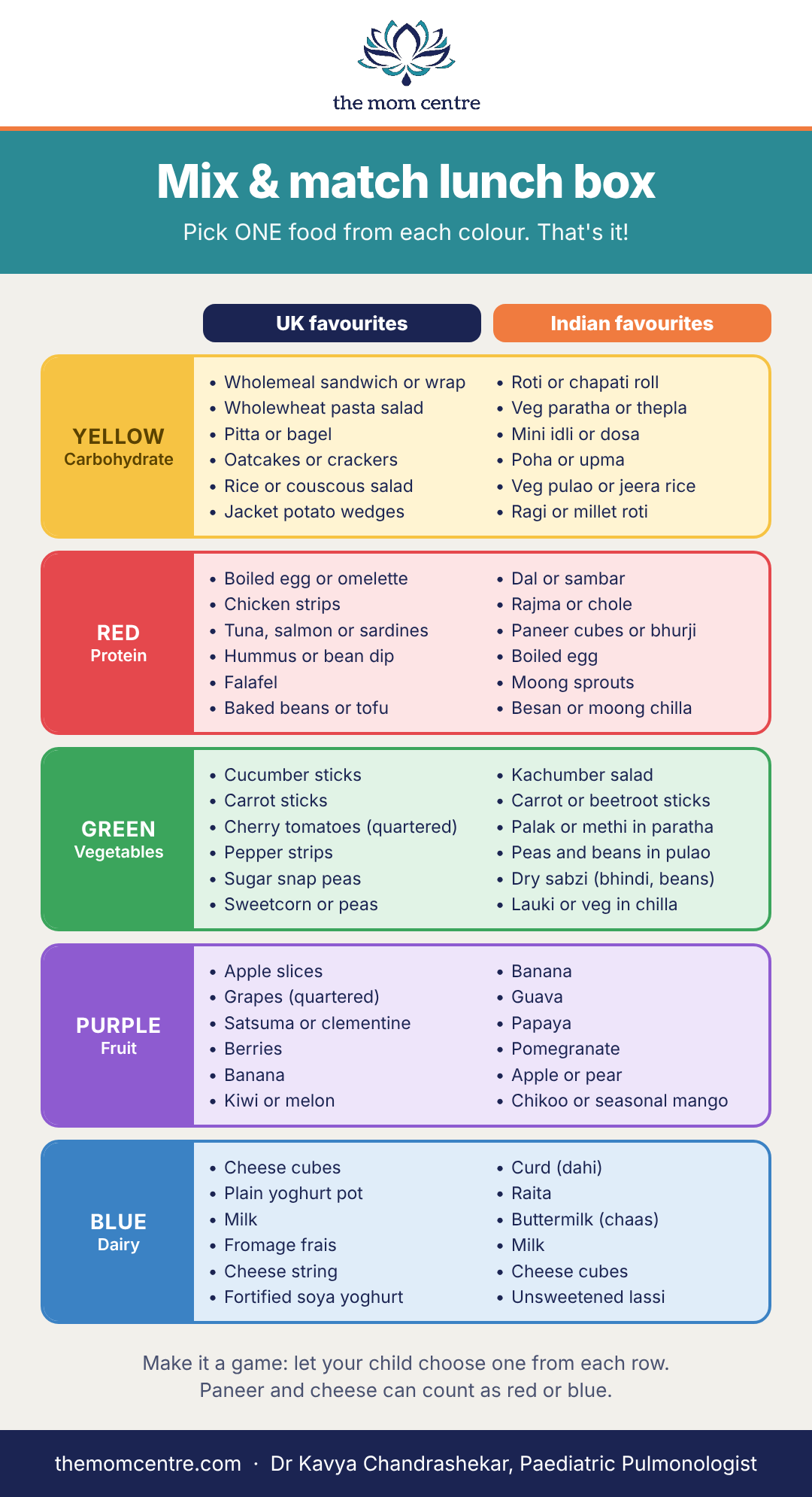
Mix and match: pick one from each colour
Don’t plan a whole menu. Just pick one food from each row. Here are some favourites from UK and Indian kitchens:
A week of UK lunch box ideas
Five days, five colours every day. Swap anything for another food of the same colour.
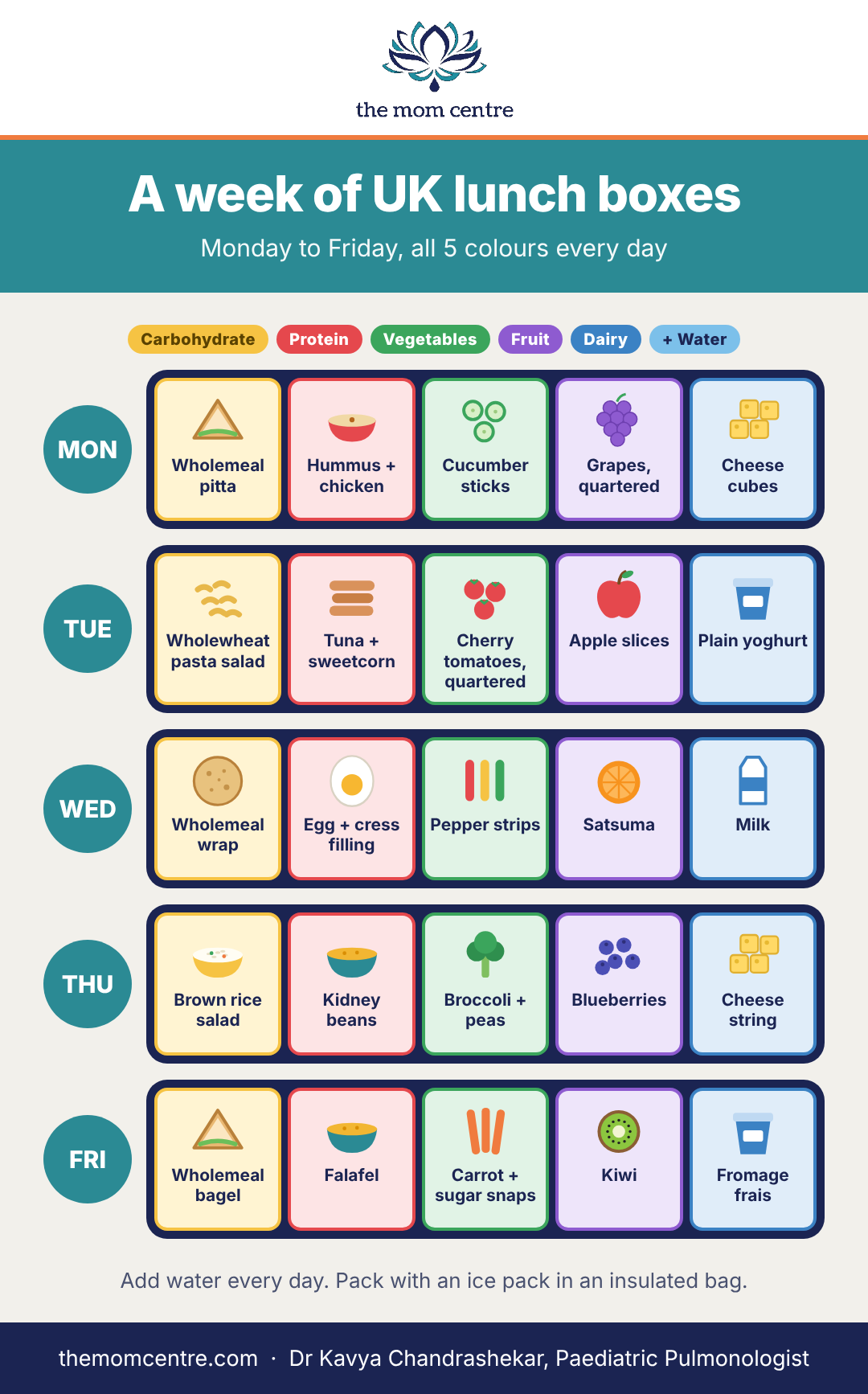
- Monday: wholemeal pitta with hummus and chicken, cucumber sticks, quartered grapes, cheese cubes.
- Tuesday: wholewheat pasta salad with tuna and sweetcorn, quartered cherry tomatoes, apple slices, plain yoghurt.
- Wednesday: wholemeal wrap with egg and cress, pepper strips, a satsuma, a small carton of milk.
- Thursday: brown rice salad with kidney beans, broccoli and peas, blueberries, a cheese string.
- Friday: wholemeal bagel with falafel, carrot sticks and sugar snap peas, kiwi, fromage frais.
UK tip: children in Reception, Year 1 and Year 2 at state schools in England get free school meals, so you may only need packed lunches for older children or on trips.
A week of Indian tiffin ideas
Indian home food is naturally colourful. The trick is making sure the protein and the fruit don’t get forgotten, and that the tiffin isn’t all rice or all roti.
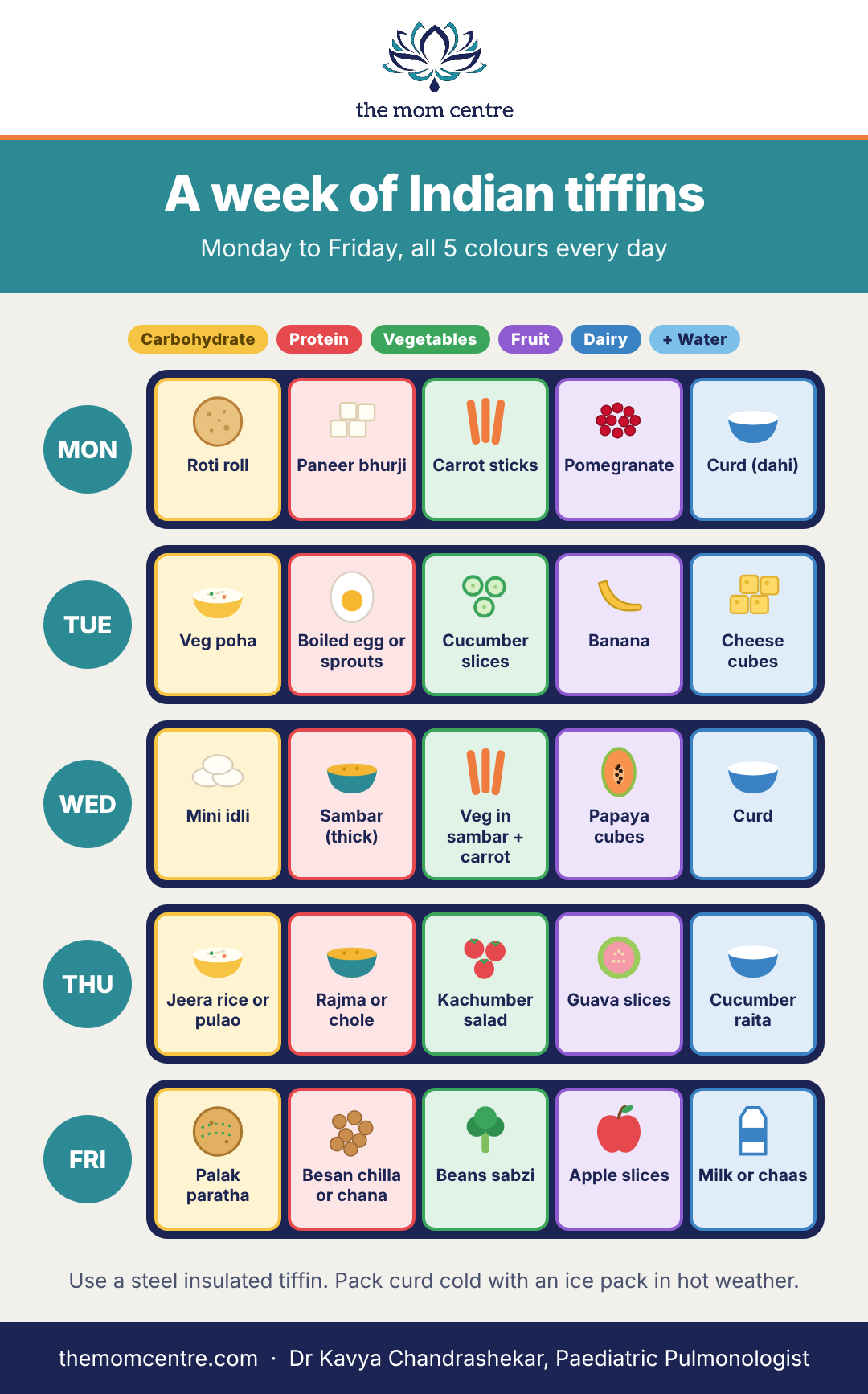
- Monday: roti roll with paneer bhurji, carrot sticks, pomegranate, a small pot of curd.
- Tuesday: veg poha with a boiled egg (or moong sprouts), cucumber slices, a banana, cheese cubes.
- Wednesday: mini idli with thick vegetable sambar and carrot sticks, papaya cubes, curd.
- Thursday: jeera rice or pulao with rajma or chole, kachumber salad, guava slices, cucumber raita.
- Friday: palak paratha with besan chilla or roasted chana, beans sabzi, apple slices, milk or chaas.
Indian tip: pack thick dal or sambar in a leak-proof container rather than a thin one. For non-vegetarian families, a few pieces of home-made chicken tikka or fish curry (boneless) are excellent red foods.
Smart swaps: less sugar, less salt
Lunch boxes often go wrong with the extras: crisps, biscuits, chocolate, juice, namkeen and instant noodles. These are high in sugar, salt or fat and push out the foods children really need. You don’t have to ban treats, but keep them for the weekend rather than the daily box.
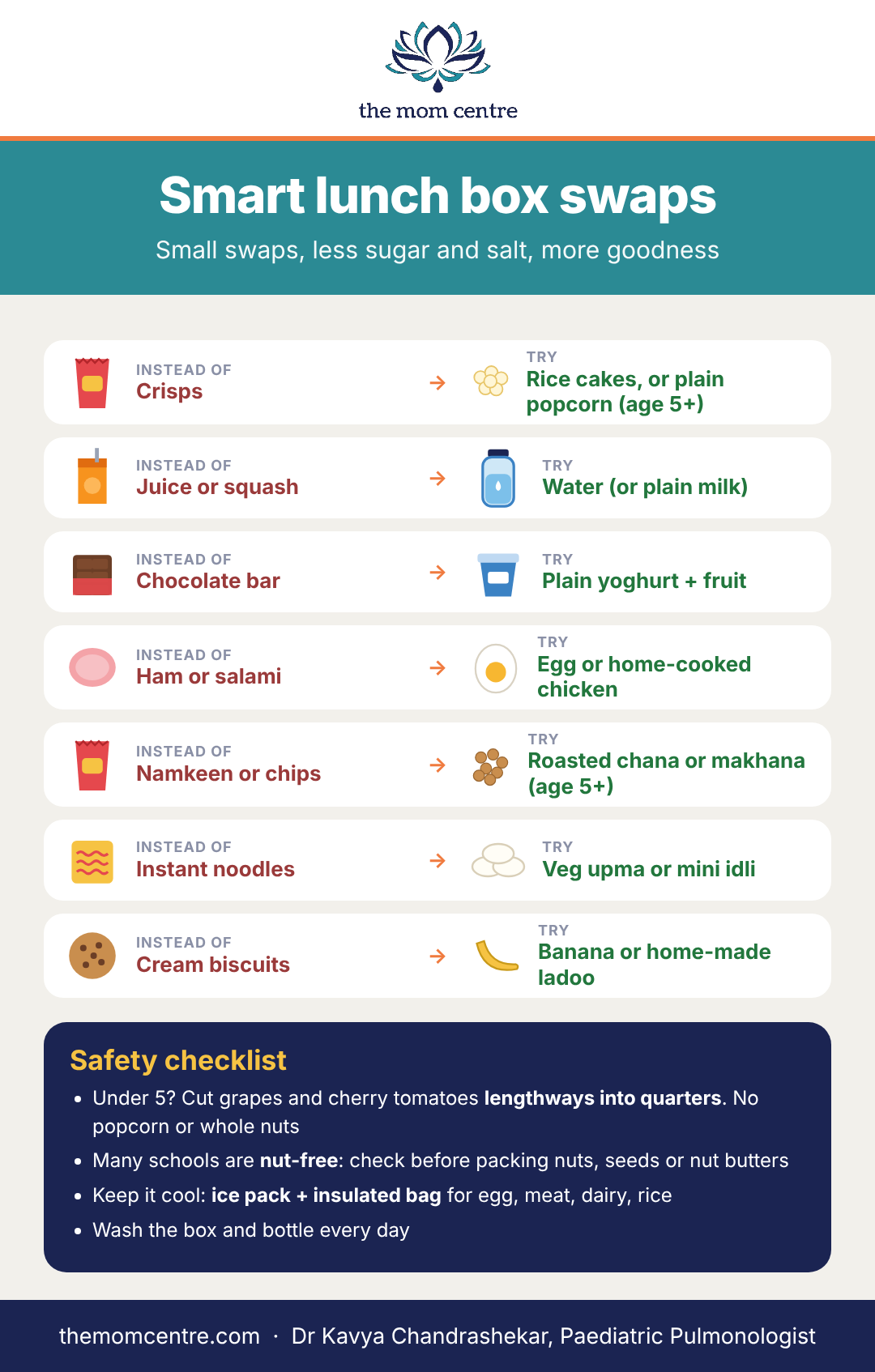
- Drinks: water or plain milk. Fruit juice and squash are sugary and damage teeth. If you give juice, keep it to 150 ml a day, with a meal.
- Processed meats like ham, salami and sausages are high in salt. Home-cooked chicken, egg or fish are better choices most days.
- Read the label: “kids” yoghurts, cereal bars and biscuits are often surprisingly high in sugar.
Lunch box safety
Choking: the most important rule for under-5s
Cut grapes and cherry tomatoes lengthways into quarters. Don’t give whole nuts, popcorn or hard sweets to children under 5. Cut sausages and hard raw veg into thin strips, not rounds. Make sure your child sits down to eat.
- Keep it cool. Egg, meat, fish, cooked rice and dairy should stay cold until lunchtime. Use an insulated bag or tiffin with an ice pack, especially in hot weather. Cooked rice left warm for hours can cause food poisoning.
- Allergies. Check your school’s nut and allergy policy. If your child has a food allergy, make sure the school has their allergy action plan.
- Wash everything daily. The box, lid seals and water bottle.
5 tips for fussy eaters
- Let them choose one food from each colour. Children eat what they’ve chosen.
- Keep foods separate. Bento-style boxes with compartments stop the “it’s touching” problem.
- Include one safe food you know they’ll eat, alongside one new food.
- Make it small and fun: mini idlis, roti pinwheels, cucumber stars, fruit on a (blunt) stick for older children.
- Don’t give up on a new food after one try. It can take 10 to 15 tries before a child accepts it.
If your child eats a very narrow range of foods, is losing weight, or meals are a constant battle, talk to your GP or paediatrician.
Frequently asked questions
What should a balanced lunch box for kids contain?
Five food groups: a carbohydrate food for energy (yellow), a protein food (red), a vegetable (green), a fruit (purple) and a dairy or calcium-rich food (blue), plus water to drink. If you can tick all five colours, the lunch is balanced.
How much food should I put in my child's lunch box?
Use your child's own hand as a guide: a fist-sized portion of carbohydrate, a palm-sized portion of protein, a handful of vegetables, a handful of fruit and a small pot of yoghurt or curd (or a small matchbox-sized piece of cheese). Portions grow as your child grows. Let their appetite guide you.
What is a healthy Indian tiffin for school?
Pick one food from each colour: for example a roti roll with paneer bhurji, carrot sticks, pomegranate and a small pot of curd. Other easy tiffins are veg poha with a boiled egg, mini idli with thick sambar, or jeera rice with rajma and kachumber.
What drink should I put in my child's lunch box?
Water is best, or plain milk. Fruit juice and squash are high in sugar and can damage teeth. If you do give juice, keep it to one small glass (150 ml) a day with a meal.
How do I keep a packed lunch safe in hot weather?
Pack food cold, use an insulated lunch bag or tiffin with an ice pack, and keep egg, meat, fish, rice and dairy chilled until lunchtime. Wash the box and bottle every day.
Are grapes and cherry tomatoes safe in a lunch box?
Yes, but for children under 5 cut them lengthways into quarters, as whole grapes and cherry tomatoes are a choking risk. Avoid popcorn and whole nuts for under-5s.
The bottom line
A balanced lunch box is simply 5 colours plus water: yellow for energy, red to grow, green to protect, purple fruit and blue for strong bones. Use your child’s hand for portions, keep treats for the weekend, and cut small round foods for under-5s. Save the infographic to your phone and you’ll never stare at an empty lunch box again.
Know a parent who packs lunch every morning?
Share the 5-colour lunch box on your school WhatsApp group. It takes 10 seconds and could make every lunch healthier.
Read next: Complementary foods for babies: the ultimate guide · Child vaccination tracker · Child’s fever: when to worry
Sources
- NHS Healthier Families: Healthy lunchbox ideas
- NHS: The Eatwell Guide
- Food Standards Agency: Choking hazards for young children
- NHS: Vitamin D
- ICMR-National Institute of Nutrition (2024): Dietary Guidelines for Indians
- FSSAI: Eat Right India / Eat Right School
- UK Department for Education: School food standards
This article is for general information and does not replace advice from your own doctor or dietitian. If your child has a food allergy, a medical condition or a restricted diet, ask your doctor for advice specific to them.